Corners can save a run in Block Blast Online, but they can also end one quickly. A corner placement only helps when it keeps the rest of the board flexible. If it seals off space, blocks a long piece, or leaves tiny gaps you can’t use later, that move turns into a trap.
The basic rule is simple: treat corners as reserve space, not your default dumping ground. Use them when they help you clear lines, protect the center, or fit an awkward piece without cutting off future options.
Why corners look safe but turn into dead space
Corners feel safe because they have natural boundaries on two sides. New players often see that and assume they are the cleanest place to park a piece. The problem is that corners also have the fewest escape routes. Once you build around them carelessly, they can stop being useful space and start acting like dead space.
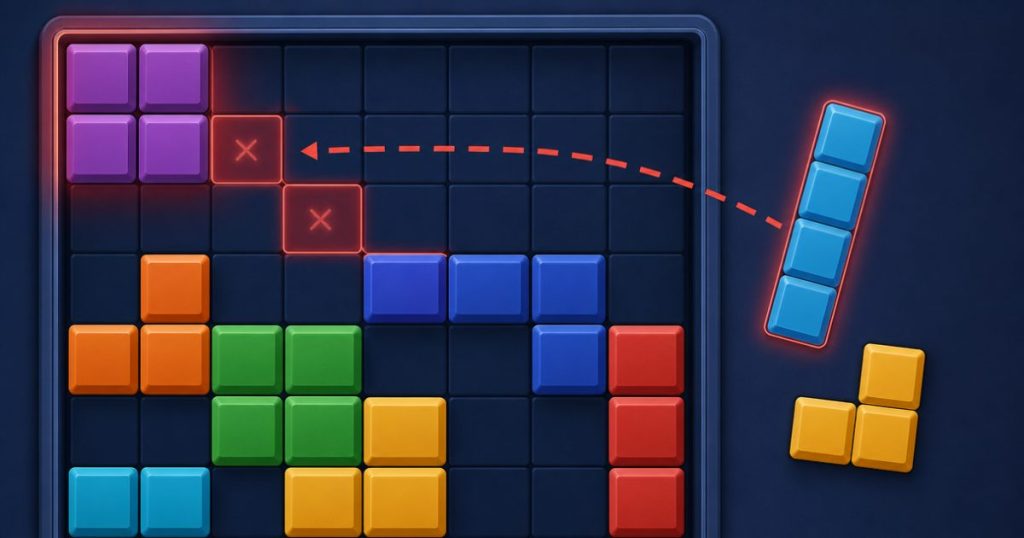
This usually happens when a corner placement leaves a one-cell notch or a thin gap along the edge. Those gaps are easy to spot and hard to fill. In practice, they reduce the number of legal placements you have for future long pieces, wide pieces, and L-shaped pieces.
Corners can also make the board look more crowded than it really is. A board with open corners may still be playable because the center has room for flexible placements. A board with sealed corners may look tidy, but it can be much harder to recover once the middle starts filling up.
What makes a corner move safe or unsafe
A corner move is usually safe when it does at least one of three things: completes a line, keeps the center playable, or leaves obvious room for follow-up pieces. The main question is not “Can this piece fit?” It’s “What space does this move preserve for the next two or three turns?”
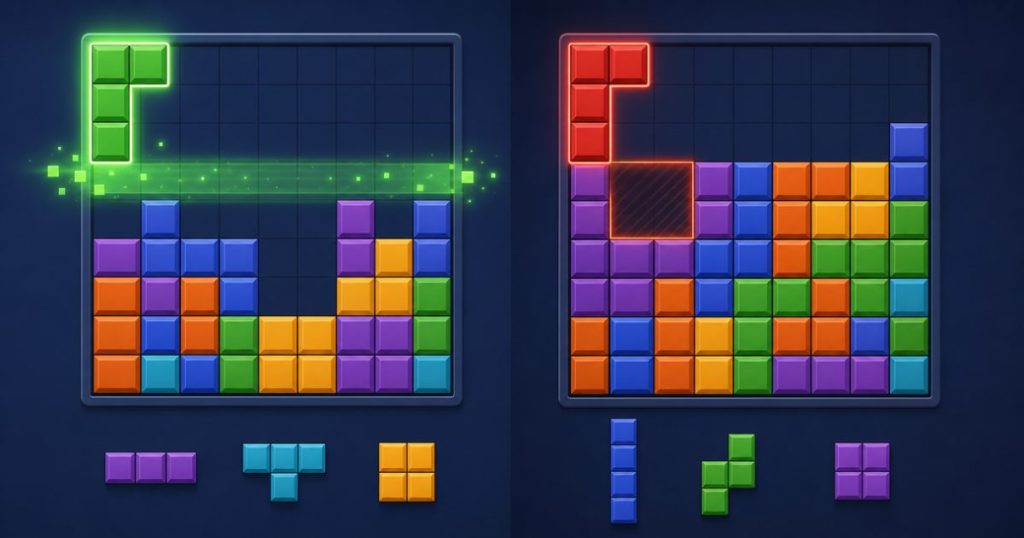
Safe corner play usually has three traits:
- It leaves an open lane for a long piece later.
- It does not create an isolated pocket beside the corner.
- It supports a line clear or another useful board reset.
Unsafe corner play does the opposite. It blocks the edge too early, boxes in the center, or turns a corner into a dead-end shape that only a very specific piece can solve.
A good test is to look for exits. If placing a piece in the corner still leaves multiple ways to keep building shape and clearing lines, it is probably fine. If it creates a one-way board where only small fragments fit afterward, it is usually too costly.
When a corner placement is the right move
Sometimes the corner is exactly where a piece should go. That is especially true when the move finishes a line or stabilizes a messy board without cutting off future options. If a corner placement buys you breathing room and keeps the board open, it can extend the run even if it does not look elegant.
Corner moves are also correct when you need to fit an awkward piece and the alternative is worse. For example, a long piece may fit along an edge, but using that edge could block a better shape you expect to need soon. In that case, taking the corner may preserve the more valuable lane.
The same idea applies when the board is getting crowded. If a corner placement is the difference between staying alive and locking yourself into an impossible shape, take it. The mistake is not using corners. The mistake is using them without a reason.
When a corner placement hurts your score
Corner play hurts most when it exists only to use space. Filling a corner just because it is empty can push the board toward a low-flexibility state. That often lowers your scoring potential because you lose the chance to set up bigger clears later.
This matters because Block Blast rewards runs that stay alive. A move that looks neat but removes future options can end the game earlier than a less tidy move that keeps the center and edges open. If you want to compare line-clearing decisions more directly, this guide on single-line vs multi-line clears helps show when a smaller clear is smarter than forcing a bigger one.
Corner placements are also dangerous when they create a pocket beside them. Once that pocket forms, it often becomes a permanent problem. The board may still have empty cells, but they are no longer useful cells.
The corner mistakes that end strong runs
The biggest corner mistake is sealing off space too early. Players see an open corner and fill it before checking what shape the rest of the board needs. That often blocks a long piece that would have been much harder to place elsewhere.
Another common mistake is building tiny pockets around the corner. These pockets usually appear when you place pieces along both the edge and the side next to the corner without planning an exit route. Once that happens, the board starts collecting awkward holes that are difficult to clear.
Players also get trapped by overusing the edges. If you treat the corners and edges as the only places to place blocks, the center shrinks too quickly. The center is the board’s main working area. When it disappears, your ability to adapt disappears with it.
- Early corner sealing: closes off future piece paths.
- Isolated pockets: leaves tiny spaces you can’t realistically fill.
- Edge crowding: reduces the open lanes needed for long or wide pieces.
- Nearest-space bias: makes you place pieces where they fit now instead of where the board needs them later.
How to use corners without trapping your board
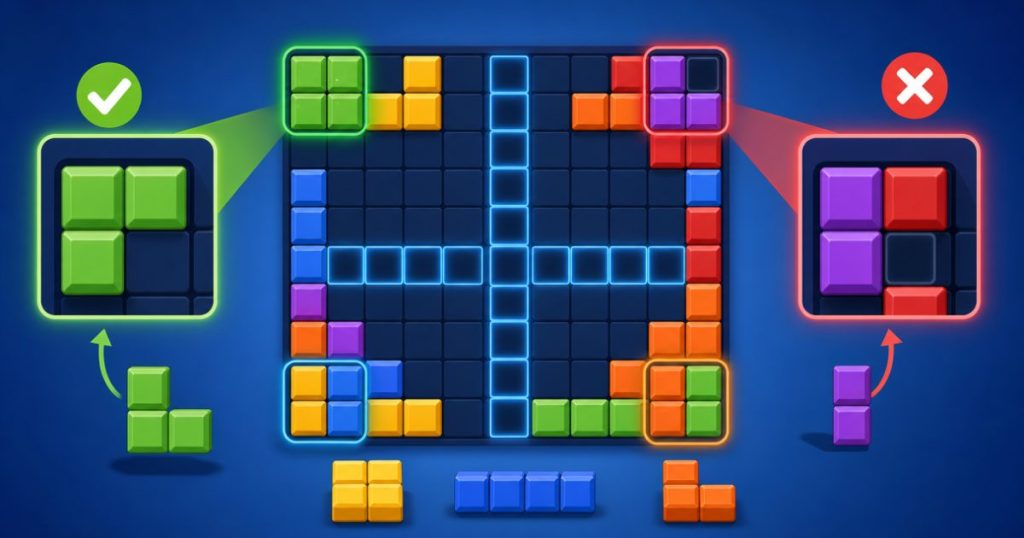
Think of the board in layers. The center is your working zone, the edges are support space, and the corners are backup storage. That order matters. If you use corners too early, you lose the flexibility that makes later turns and line clears possible.
A practical habit is to leave at least one route open for large or long pieces. That route can run across the center, down an edge, or along a wide lane you have intentionally preserved. If a corner placement removes every route of that type, it is probably the wrong move.
It also helps to ask whether the move protects high-value open space. A good corner move keeps the center large enough for multiple follow-up placements. A bad one may solve the current turn but make the next three turns much harder.
When the board starts to tighten, prioritize flexibility over neatness. A slightly messy board with open lanes is usually better than a tidy board with trapped corners.
A simple decision rule for corner moves
- Check whether the move clears a line or creates one soon after.
- Look for a path that still allows a long or wide piece to fit later.
- See whether the placement creates a tiny pocket beside the corner.
- Protect the center if the board is getting crowded.
- If two moves are close, choose the one that leaves more follow-up options.
That rule works because it forces you to think beyond the current piece. Good Block Blast players do not just place what fits. They place what keeps the next board state playable.
Corner strategy ties directly to board management and space management. The longer you can keep the board open, the more chances you have to build clears instead of reacting to emergencies. That is usually what separates a short run from a strong one.
When you are unsure, favor the move that keeps the most exits available. A corner is only valuable if it helps the board stay alive.
Frequently Asked Questions
Why do corners cause so many problems in Block Blast?
Corners reduce flexibility because they have fewer escape routes. If you fill them too early, they can create dead space, block long pieces, and leave awkward gaps along the edges.
When is it smart to place a block in a corner?
Use a corner when it clears a line, protects the center, or fits an awkward piece without cutting off future placements. A corner move should improve your next few turns, not just use empty space.
What pieces are most likely to get trapped by bad corner usage?
Long pieces, wide pieces, and L-shaped pieces are the most vulnerable. They need open lanes and clean edges, so corner clutter can make them much harder to place.
What should I do if my board already has awkward corner gaps?
Stop trying to make the board look neat and focus on reopening lanes. Prioritize moves that reconnect the center, clear lines, or remove the pieces creating the pocket around the corner.
Corners are useful when they preserve flexibility, not when they consume it. If a corner placement keeps the center open, leaves a lane for bigger pieces, or sets up a clear, it’s usually the right move. If it creates a pocket, blocks the edge, or turns the board into a dead-end shape, skip it.
The fastest way to improve here is to stop treating empty corners as free space. Treat them as limited space that has to earn its place on the board. That shift will help you survive longer runs and make better decisions under pressure.