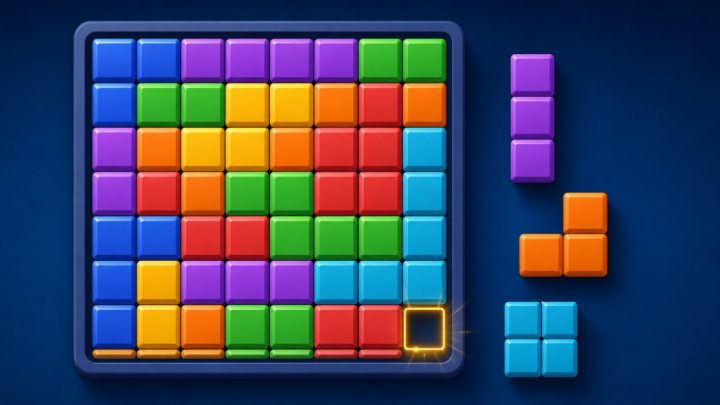
Yes, 100,000 is possible in Game Block Blast, but it’s a serious high-score target, not a casual one. Reaching it usually means surviving a long run, making very few bad placements, clearing space efficiently, and getting a bit of help from the piece order along the way.
For most players, the score comes from repeatable habits rather than one perfect move. Strong board management matters more than forcing every clear, and the runs that reach 100,000 usually stay flexible for a long time before the board starts to tighten up.
What a 100,000-point run actually requires
A score that high usually depends on three things working together: survival, efficient clearing, and low error rates. If the board fills up too quickly, you run out of turns before the score can grow. If you clear space without thinking ahead, you may survive a little longer but still trap yourself with awkward gaps. And if you make careless placements, one bad move can end a run that was otherwise going well.
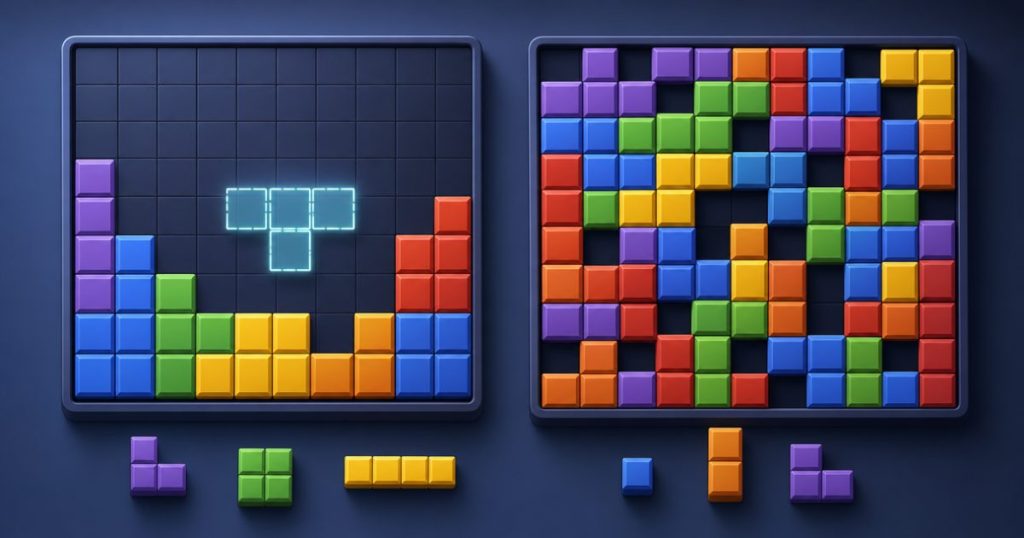
That’s why 100,000 is a high-skill target rather than a typical casual result. Strong players can get there, but it usually takes more than luck. The best runs come from players who keep the board open, place blocks with future shapes in mind, and recover well after awkward draws.
There’s one important caveat: scoring depends on the exact rules of the version of Block Blast you’re playing. If your version rewards line clears, chain clears, or combo-style sequences more heavily, those mechanics matter more. If scoring is flatter, survival and space control matter even more. Either way, the core idea is the same: the longer you stay alive without fragmenting the board, the better your chances of reaching a huge score.
Why board space matters more than aggressive scoring early
Early in a run, it’s often smarter to protect the board than to chase every possible clear. A quick line clear can feel rewarding, but if it leaves a tiny hole or breaks up a large open area, you may be paying for that point gain later. High-score play treats empty space like inventory. You want to keep enough of it, and in the right shapes, to fit whatever the game gives you next.
For example, imagine you can place a piece in a way that clears a line now, or in a way that keeps a wide lane open for future blocks. If the first option creates a dead pocket near the edge, the second option is often better, even if it scores a little less immediately. That tradeoff is one of the biggest differences between a run that dies early and a run that survives long enough to chase 100,000.
How clears and combos help when the game rewards them
If your version of Block Blast gives extra value to repeated clears or combo-like sequences, then the goal is not just to clear lines. The goal is to set up clears that follow one another naturally. That usually means building the board so one placement opens multiple options, or leaving a nearly complete line ready to be finished by several different shapes.
That said, combo chasing should never destroy board flexibility. A risky setup that depends on one exact piece sequence can fail fast. Strong players usually balance both goals: they look for clears that pay well, but they only commit when the board still has room to recover if the next draw is awkward.
The habits that give you the best chance
The players who reach big scores usually do the same few things over and over. They keep the board organized, avoid splitting it into tiny islands, and think about where the next awkward piece might need to go. That consistency matters more than one lucky turn.
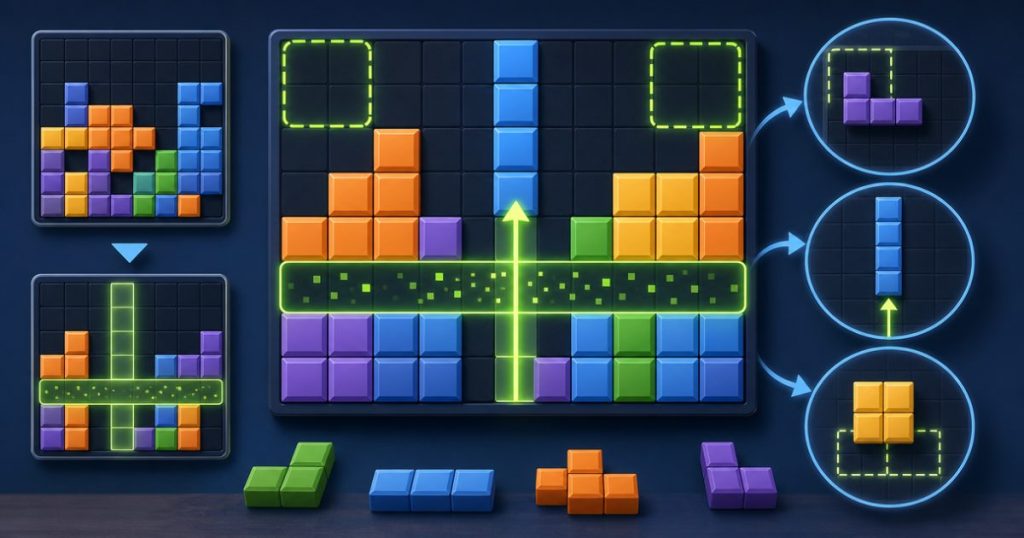
- Keep one or two open lanes instead of filling every edge.
- Avoid creating single-cell holes or narrow pockets that only one shape can fill.
- Place pieces so the board stays flexible, not just so the current move scores points.
- Use clears to open space, not just to empty one area while trapping another.
- Accept small short-term sacrifices if they preserve a much safer board state.
A useful way to think about it is this: safe play keeps you alive, and score-focused play helps you turn that survival into points. The mistake is treating those two goals as opposites. In practice, the best high-score runs combine both. They are safe enough to continue, but efficient enough to keep the score climbing.
What top players do differently from casual players
Top players usually spend less time reacting and more time protecting options. They don’t place a block just because it fits. They place it because it fits without hurting future placements. That difference sounds small, but it changes how often the board stays playable after a weird draw.
They also tolerate less mess. A casual player may accept a board with scattered gaps and hope to fix it later. A strong player tries to stop that pattern early. Once the board starts breaking into tight pockets, the run becomes much more dependent on luck.
If you want a deeper look at how that thinking works from turn to turn, the order you play pieces in matters a lot. Good piece-order habits can protect your board before it starts to collapse, which is why many players study which block to play first before focusing on score chasing.
What usually stops a run before it gets near 100,000
The biggest failure point is usually not one dramatic mistake. It’s the slow buildup of small problems. A few careless gaps here, a bad edge placement there, and suddenly the board has too many dead spaces to work with. Once that happens, even good piece draws may not save the run.
Randomness matters too. Even strong players can be derailed by an awkward sequence of shapes, especially if the board is already slightly damaged. That’s why high scores are partly a skill test and partly a consistency test. You need to handle ugly draws without letting them snowball.
- Careless gap creation makes the board harder to repair.
- Overcommitting to one side can trap the other side later.
- Ignoring future piece shapes turns a good-looking board into a dead end.
- Chasing one clear too hard can destroy the large open zones you still need.
- Waiting too long to clean up clutter often leaves no recovery path.
Dead spaces are especially dangerous because they look harmless until they matter. A tiny gap near the edge can block a future long piece, and one blocked long piece can end a promising run. If dead space is a problem for you, this guide on dead spaces in Block Blast shows why small holes become such a big deal.
A practical benchmark if your best score is still far below 100,000
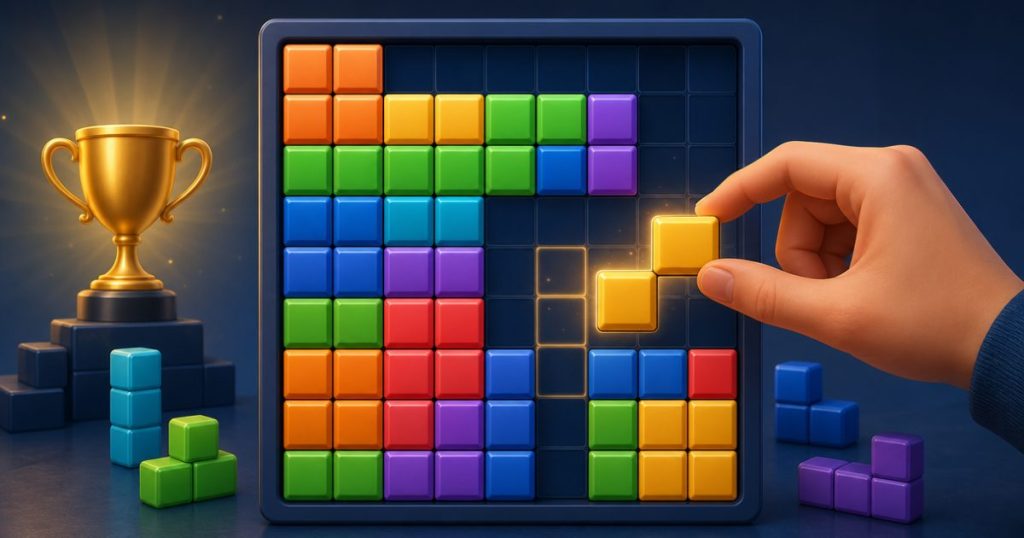
If you’re nowhere near 100,000 yet, start with the habits that lengthen runs. A higher score almost always follows a longer, cleaner run. If your games end because of cramped corners, random gaps, or one bad move that collapses the board, then scoring more aggressively won’t help much. You need more board stability before you need more scoring tricks.
Set smaller targets first. Try to improve how long you can keep the board flexible, how often you can clear without fragmenting the grid, and how rarely a bad placement ruins the next few turns. When those basics improve, the score usually climbs with them.
Safe play versus score-focused play
| Approach | What it tries to do | When it works | When it fails |
|---|---|---|---|
| Safe play | Preserve open space and avoid traps | When the board is getting crowded or the piece order is awkward | When it becomes too passive and stops creating clears |
| Score-focused play | Set up efficient clears and repeated scoring turns | When the board is still flexible and multiple follow-up options remain | When the setup creates holes or depends on perfect future pieces |
The strongest runs usually move between those two modes. Early on, the priority is flexibility. As the board develops, look for efficient clears that don’t compromise survival. That balance is what makes 100,000 achievable instead of just theoretical.
Frequently Asked Questions
Is 100,000 possible for an average player in Block Blast?
It can be reached, but usually not through casual play alone. Most players need strong board management, long survival, and a lot of consistency before 100,000 becomes realistic.
What matters more: combos or survival?
Survival matters more unless your version of Block Blast strongly rewards repeated clears. A combo only helps if the board still stays flexible afterward.
What should I practice first if my score is still low?
Focus on avoiding dead spaces, keeping open lanes, and placing blocks so future pieces still have room. Longer runs usually lead to higher scores faster than aggressive play does.
How much of reaching 100,000 is luck?
Luck matters because piece order can help or hurt a run, but skill matters more over time. Strong players reduce how much bad draws can damage the board.
Yes, 100,000 in Block Blast is realistic for strong players, but it’s not a normal casual benchmark. To get there, you need disciplined space management, careful piece placement, and enough consistency to survive awkward draws without breaking the board apart.
If your best score is still much lower, focus on run length and board flexibility before chasing bigger combos. Once you can keep the board clean for longer, higher scores become a much more natural result of good habits rather than a lucky exception.