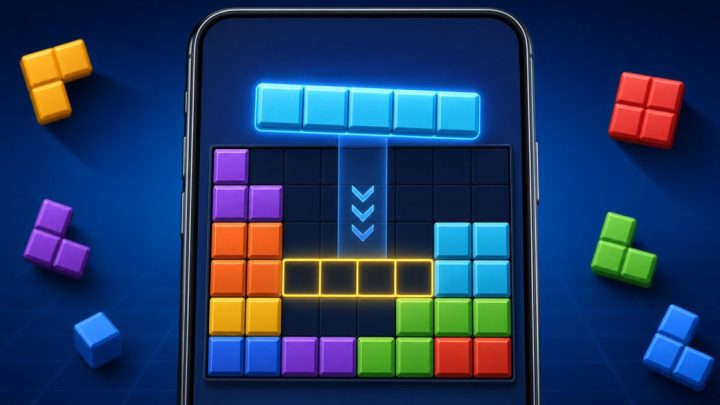
Dead spaces are the small gaps on a Block Blast board that look harmless at first but are hard, or eventually impossible, to fill with the pieces the game gives you. A single empty cell, a tucked corner pocket, or a cavity under a stacked shape can be enough to trap your board and end a run.
The real problem is not the gap itself. Dead spaces reduce placement flexibility. Once the board starts breaking into isolated pockets, even good pieces stop fitting cleanly, and every move gives you fewer useful options.
What dead spaces actually are
A dead space is an empty spot that no longer fits into a realistic future plan. Sometimes it is truly impossible to fill with the current board shape and piece mix. Other times it is still technically open, but only a very specific piece could fix it, so for practical purposes it is already a problem.
That distinction matters. Not every awkward gap is fatal. A narrow space may still be useful if it connects to an open lane or can be covered by a larger piece later. A dead space is different because it isolates part of the board and makes future moves harder instead of easier.
Why tiny gaps are more dangerous than they look
Large open areas can absorb many different shapes. Tiny gaps usually cannot. A one-cell hole, a two-cell notch in the wrong orientation, or a corner pocket often waits for one specific shape, and you may never get it in time.
That is why small empty cells cause so many losses. They do not look threatening, but they take away options. Once a board has a few of them, even a decent piece can become unusable because it needs a clean stretch of space, not a broken one.
How dead spaces form during normal play
Most dead spaces come from ordinary moves, not dramatic mistakes. The game rewards quick clears, so players often place blocks where they fit right now instead of where the board will stay open later. That short-term choice can leave a cavity, an overhang, or an isolated pocket.
One common pattern is stacking shapes against a wall without watching the bottom edge. Another is clearing a line too early, which can leave a notch that splits the board into two awkward zones. Over time, those small choices create board fragmentation, and the clean lanes you need for future pieces disappear.
Edge and corner traps
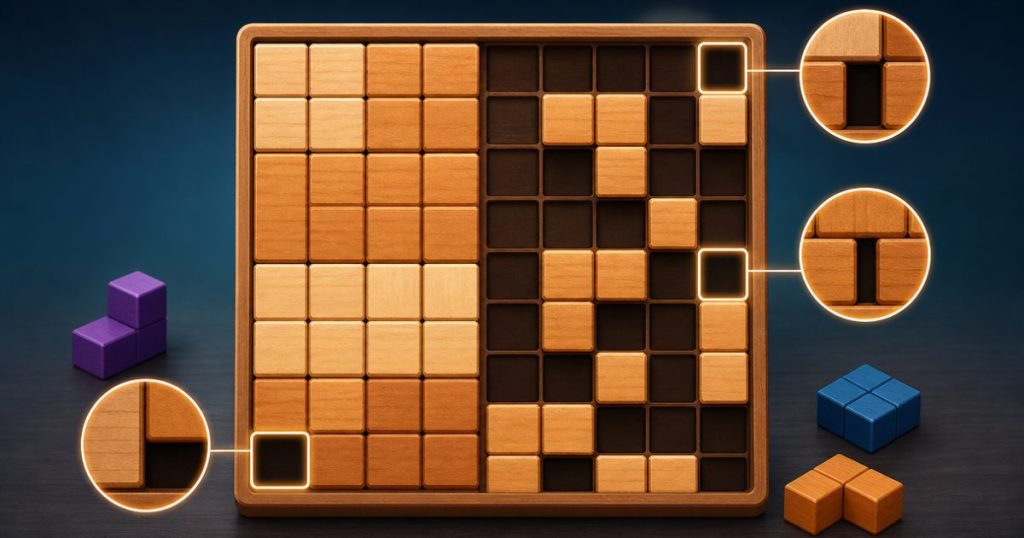
Dead spaces often appear near edges and corners because those areas are easiest to strand. If you place a piece in a way that leaves a one-cell pocket along the wall, that gap may stop being useful very quickly. Corner pockets are especially dangerous because they are hard to access and easy to forget about while you focus on the rest of the board.
A simple example: if you leave a single empty cell at the far edge and then fill the surrounding area, that cell may no longer connect to any practical placement. It is still empty, but it has lost its value.
Overhangs and hidden cavities
Stacked pieces can create cavities underneath them. This happens when a placement looks efficient from above but leaves a hollow pocket below a ledge. Those hidden spaces are easy to miss because the board may still look organized at first glance.
Once enough shapes build around the cavity, that pocket becomes a dead space. It is trapped by the board itself, and only a very specific piece can repair it. If that piece does not arrive, the cavity keeps shrinking your usable space.
Why dead spaces end runs so often
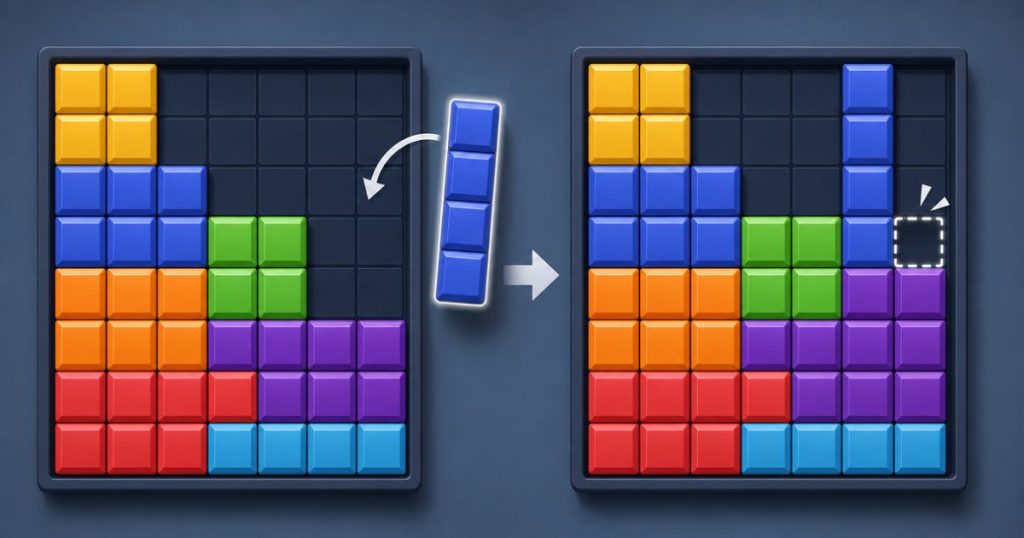
Block Blast gives you different block shapes, but not a perfect answer for every board. Because the piece set varies, a gap that looks manageable now can become a permanent liability if it depends on an uncommon shape or a particular orientation.
That is why players lose to small gaps so often. The board does not fail all at once. It loses flexibility first. Then one large piece arrives, no legal placement exists, and the run ends because the board has no open lane left to absorb the shape.
| Clean board | Fragmented board |
|---|---|
| Open lanes across the board | Isolated pockets near edges and corners |
| Many shapes can fit | Only a few shapes can help |
| Easy to plan several moves ahead | Every move risks sealing off space |
| Line clears improve flexibility | Line clears often make the board more broken |
A clean board gives you room to recover from awkward pieces. A fragmented board does the opposite. It turns normal placements into traps because there is no longer a safe place to park a difficult shape while you wait for the next move.
How to prevent dead spaces while you play
The best prevention is to protect flexible open lanes. Try to keep at least one area of the board where several shapes can still fit comfortably. That gives you room to absorb bad draws without making the board worse.
It also helps to avoid isolated pockets. If a placement creates a tiny gap that only one shape could cover, ask whether the move is worth it. Sometimes the right choice is to leave a line uncleared for one more turn if clearing it now would split the board into smaller, less useful sections.
- Keep one side or lane organized. A clean channel gives you a place to fit larger blocks later.
- Watch the corners first. Small gaps in corners are easy to strand.
- Do not build cavities under ledges. Hidden pockets are hard to repair.
- Prefer placements that keep the board rectangular. Simple shapes are easier to work with than jagged ones.
- Clear lines when they improve flexibility, not just when they are available.
Good dead-space management is often about accepting a slower clear. A move that scores less right now may keep the board open enough to survive five more turns. In long runs, that trade-off usually matters more than a quick line clear.
Should you always clear a line?
No. A line clear is only good if it improves the board. If clearing a row leaves a one-cell notch, splits a useful open lane, or forces you to stack blocks into a tighter corner, the clear may hurt you more than it helps.
The better question is not “Can I clear this line?” but “What does the board look like after the clear?” If the answer is a cleaner, wider, more flexible surface, take it. If the answer is a more broken board with new pockets, hold back if you can.
What to do when the board already has bad gaps
Once dead spaces start appearing, shift from building score to restoring structure. Stop chasing every available clear and look for placements that reopen lanes, flatten the board, or stop a pocket from getting worse.
When a board is damaged, the safest move is often the one that does not make the shape of the board more complicated. Favor placements that preserve open space over placements that create new overhangs. If one side is already messy, try to keep the other side clean so you still have a reliable landing zone.
If you want a broader approach to using helpers without losing your own decision-making, this guide on how to use a Block Blast solver without ruining your game explains how to keep the challenge intact while making smarter choices.
A quick way to judge whether a gap is recoverable
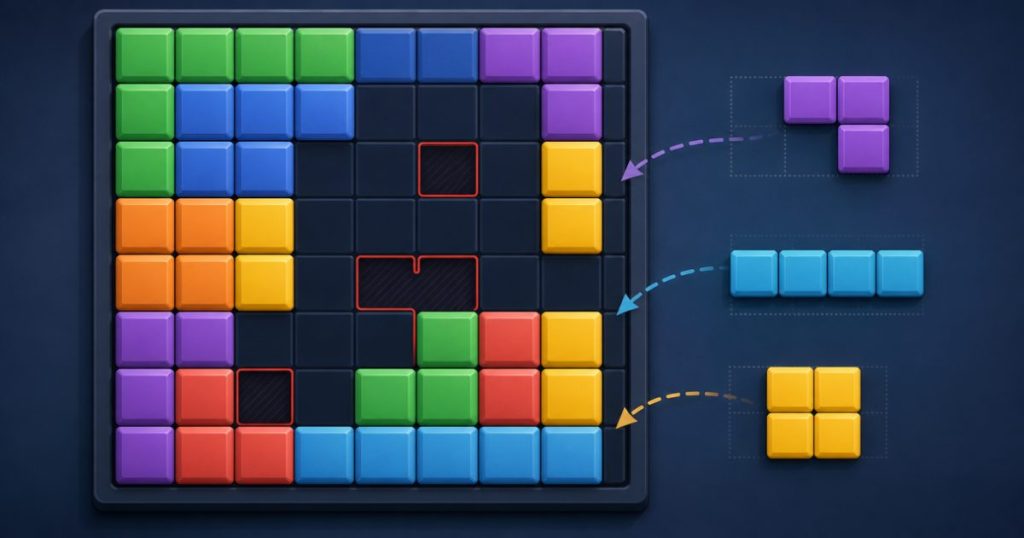
Ask three questions. First, can more than one shape fit there? Second, does the gap connect to a larger open lane? Third, will placing around it make the board more fragmented?
If the answer to the first two is no and the third is yes, the gap is probably becoming dead. If the space still connects to a broad area and several block shapes can use it, it is awkward but not doomed yet.
That is the practical difference between a temporary problem and a real dead space. Temporary awkwardness can usually be managed. A true dead space starts shrinking your options immediately.
Simple board habits that reduce dead-space risk
- Leave yourself one organized lane whenever possible.
- Do not stack pieces so tightly against a wall that they create pockets underneath.
- Check the corners before making a placement that changes the board shape.
- Prefer moves that keep the center or one side open and readable.
- When the board gets messy, focus on restoring space instead of chasing one more quick clear.
Those habits do not guarantee a perfect run, but they make the board much easier to manage. That matters because Block Blast is not only about surviving the current move. It is about keeping future moves possible.
If you can spot tiny gaps before they turn into isolated pockets, you will last longer and score better. The goal is not to avoid every awkward space. The goal is to stop the board from breaking into pieces you can no longer work with.
Frequently Asked Questions
How do I know a gap is a real dead space in Block Blast?
If a gap is isolated, hard to reach, and depends on one very specific shape, it is close to being dead. A gap is still workable if it connects to a larger open lane and several block shapes can use it.
Are small gaps always bad?
No. Some awkward spaces can still be repaired. They become dangerous when they start cutting off future placements or create pockets that most pieces cannot reach.
Should I avoid the edges of the board?
Not completely. Edges are useful, but they also create easy places to strand tiny pockets. Use them carefully and avoid building awkward cavities against the wall.
What should I do when my board is already fragmented?
Shift focus from quick clears to recovery. Try to reopen a lane, flatten the board, and stop creating new pockets. A cleaner shape matters more than a fast line clear at that point.
The safest Block Blast boards are not the emptiest ones. They are the ones that stay flexible, with open lanes, clean edges, and no isolated pockets waiting to trap a future piece. If a move creates a tiny gap that looks harmless but weakens the board’s shape, it is often a warning sign, not a small detail.
When you play, keep asking whether a gap can still connect to the rest of the board. If it can’t, treat it as a problem now, not later. That habit is one of the easiest ways to survive longer runs and avoid losing to the tiny spaces that end games.