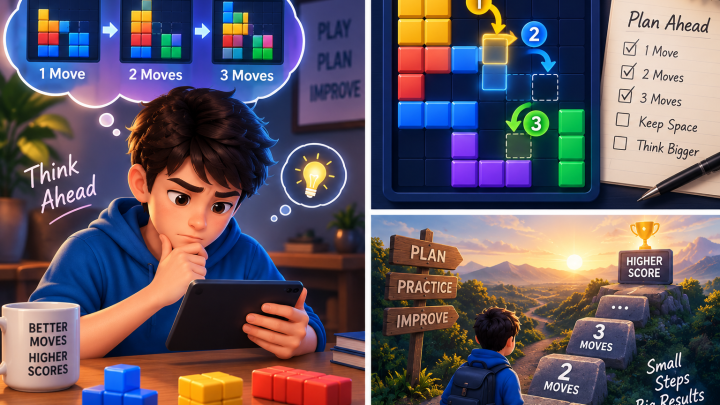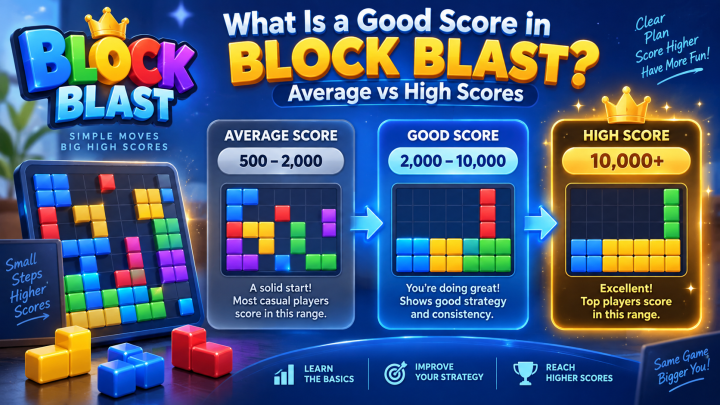
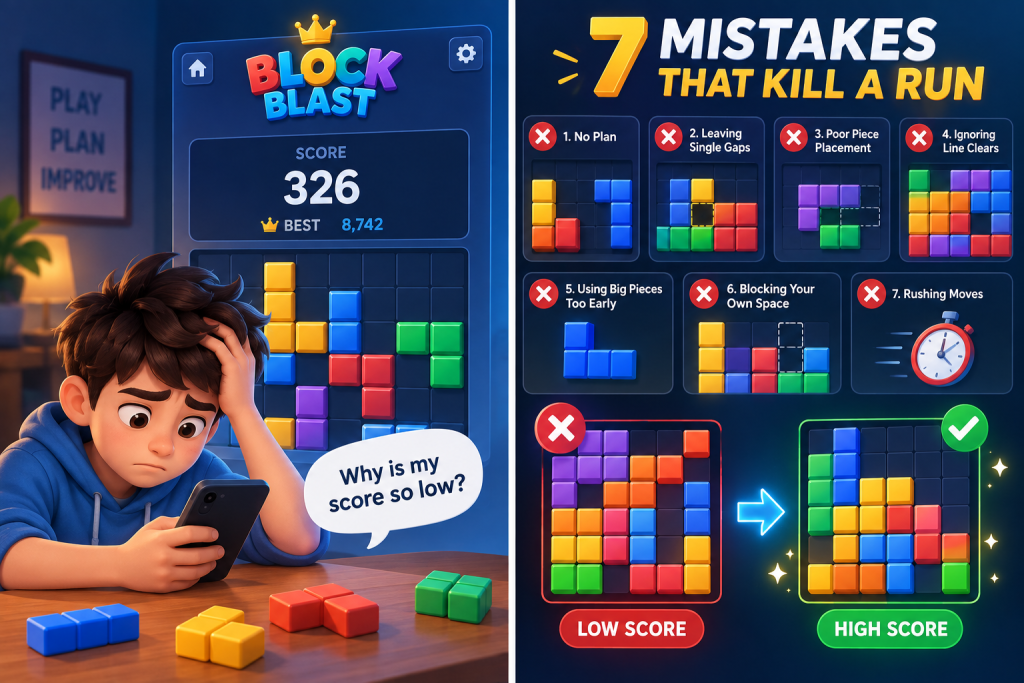
A low score in Block Blast usually has less to do with bad luck than most players think. More often, the problem comes from small habits that slowly make the board harder to play: placing blocks too quickly, clearing lines too early, or breaking open space into awkward gaps.
In Block Blast Online, long runs usually come from managing space well and keeping your options open. A few clever moves at the start will not matter much if the board becomes cramped shortly afterward.
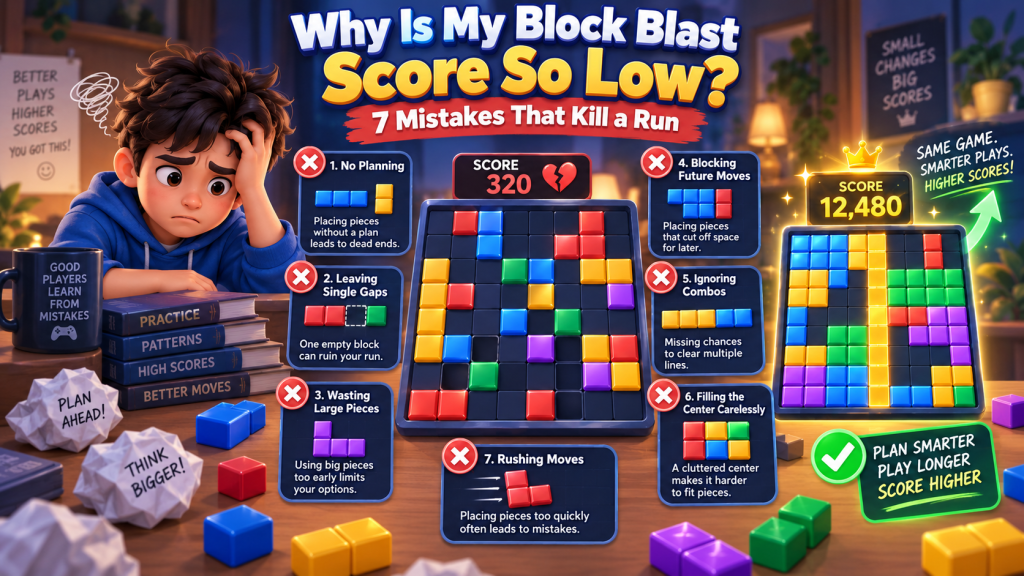
If your score keeps stopping earlier than expected, one of these seven mistakes is probably the reason.
1. Clearing Lines Too Early
Clearing a row or column feels like the obvious thing to do whenever the opportunity appears. But an immediate clear is not always the best move.
Sometimes completing a line removes useful structure or forces you to use a large open area that would have been more valuable later. A board with flexible empty space can be more useful than a quick line clear, especially early in a run.
Before completing a line, ask yourself:
Will this move give me more placement options over the next few turns?
If the answer is no, there may be a better place for the block.
The goal is not simply to clear as many lines as possible. It is to clear them while keeping the board easy to work with.
2. Waiting Too Long to Place Large Blocks
Large pieces become dangerous when the board starts filling up.
A common mistake is keeping a large block for later because there appears to be plenty of room. After placing the easier pieces, however, the remaining space may no longer fit it.
If a difficult or space-hungry block already has a safe position, it often makes sense to deal with it early.
Small pieces usually have more placement options. Large squares, long bars, and awkward shapes can quickly become impossible to place once the board becomes fragmented.
A useful rule is:
Handle the hardest block while you still have room.
Do not wait until the board is nearly full to start looking for a place for it.
3. Creating Too Many Small Gaps and Dead Spaces
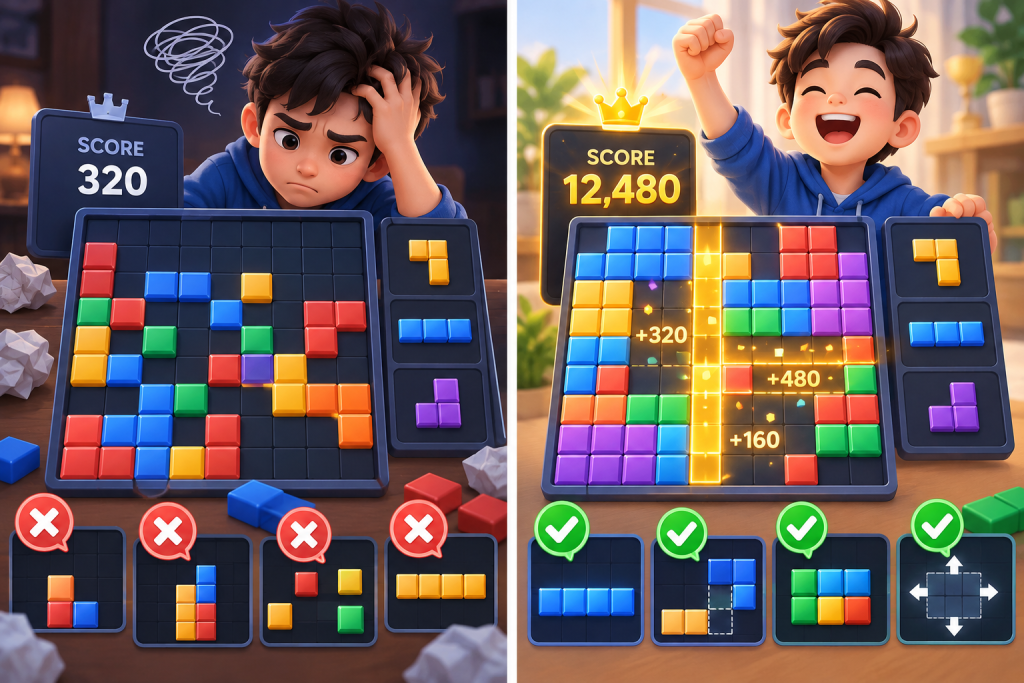
One of the fastest ways to lose a Block Blast run is to split the board into tiny spaces that future pieces cannot use.
Single-cell holes, narrow gaps, isolated corners, and uneven pockets may not look dangerous at first. But every unusable space effectively makes your board smaller.
A technically empty board can still be difficult to play if most of that empty space is divided into bad shapes.
Try to keep your placements connected and relatively smooth. Avoid creating small holes just because a block happens to fit somewhere.
In many situations, leaving a larger open area is better than filling every available gap.
4. Only Thinking About the Current Move
Block Blast rewards players who think beyond the block they are placing right now.
A move can look perfect in isolation but leave terrible positions for the remaining pieces. By the time you notice the problem, there may be no way to recover.
Before placing a block, look at all the pieces currently available and consider how each one could fit after your move.
Ask yourself:
If I place this piece here, where will the harder pieces go?
You do not need to calculate a huge number of moves ahead. Simply taking a few extra seconds to compare possible placements can prevent many avoidable losses.
The best move is often not the one that scores immediately. It is the one that leaves the most options afterward.
5. Ignoring the Order of Your Blocks
The order in which you place blocks matters.
You can receive the same set of pieces and end up with completely different results depending on which one you place first.
For example, placing a small piece immediately might occupy the only space that could fit a long bar. If you had placed the long piece first, the small block might still have had several possible positions.
When deciding what to play first, identify the block with the fewest safe placements.
In general:
- Difficult blocks should be handled earlier.
- Flexible blocks can usually wait.
- Large open spaces should be protected until you know whether they are needed.
This simple habit can save runs that would otherwise end because you were “one square short.”
6. Trying to Keep the Board Too Clean
A visually clean board is not always a strong board.
Some players focus so much on clearing rows and keeping everything neat that they sacrifice useful space. A board can look almost empty while still being badly positioned for the next set of pieces.
Instead of asking:
“Does my board look clean?”
Ask:
“Can this board survive several more turns?”
That is a much better way to judge your position.
High scores usually come from maintaining flexibility. You want enough room for different block shapes, multiple ways to create future clears, and at least one large area that has not been broken into small pieces.
A slightly messy but flexible board can be much stronger than a clean board with only narrow spaces left.
7. Playing Too Fast When the Board Gets Difficult
Many bad Block Blast runs become worse because the player speeds up when the board starts getting crowded.
Once space becomes limited, every placement matters more. This is exactly when you should slow down.
Look for warning signs such as:
- Large pieces having only one possible position.
- Long blocks no longer fitting comfortably.
- Several isolated empty cells.
- Most remaining spaces being narrow or irregular.
- Every move feeling forced.
When these signs appear, stop chasing immediate clears and focus on preserving whatever usable space remains.
You may not always be able to save the run, but careful play can often extend it much longer than rushed placements.
How to Improve Your Block Blast Score Quickly
If you want to improve without completely changing the way you play, start with three habits:
Keep one large open area whenever possible.
Large spaces give you flexibility when difficult pieces appear.
Place difficult blocks before easy ones.
If one piece has very few safe positions, deal with it first.
Avoid small holes and narrow gaps.
Every unusable space makes future turns harder.
These three changes alone can make your runs much more consistent.
You do not need to play faster. In fact, playing slightly slower often leads to better scores because you notice problems before they become impossible to fix.
Focus on Space, Not Just Immediate Points
New players often judge every move by how many lines it clears immediately.
That is understandable, but it can lead to short runs.
A better approach is to think about the value of your remaining space. Sometimes skipping an attractive line clear allows you to preserve an area that later fits several difficult pieces.
Block Blast is largely a game of space management.
The longer you keep the board flexible, the more opportunities you have to create clears later.
Why Is My Block Blast Score So Low?
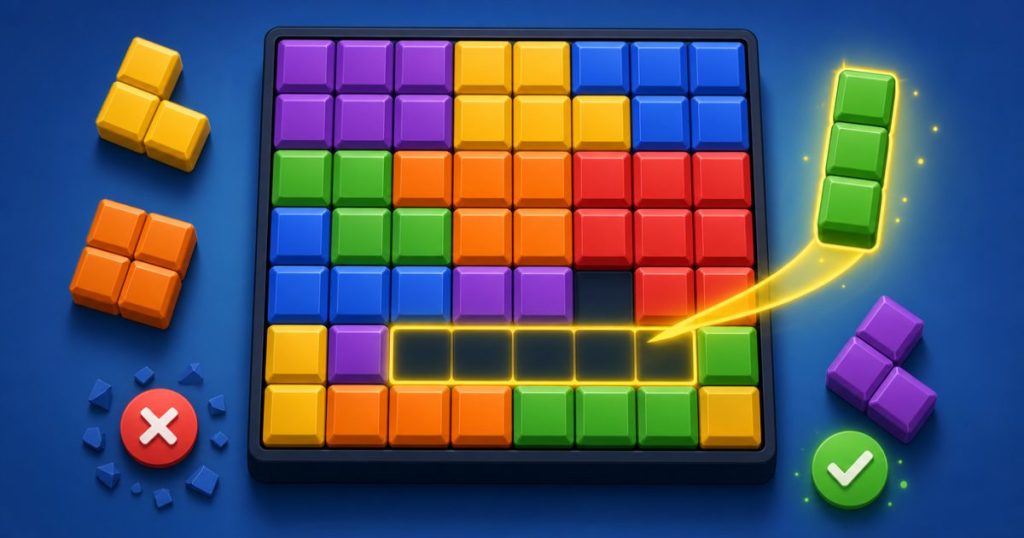
If you are still asking, “Why is my Block Blast score so low?”, the most likely answer is that your board is becoming restricted too early.
It usually happens because of repeated decisions rather than one terrible move:
- Large pieces are left until too late.
- Small holes slowly accumulate.
- Lines are cleared without considering the resulting board.
- Easy pieces are placed before difficult ones.
- Too much attention is given to immediate points instead of future space.
Once you start thinking about what each placement leaves behind, your strategy changes naturally.
Instead of asking, “What can I clear right now?” start asking:
“What will still be open after I make this move?”
That small change in mindset can make a major difference to how long your runs last.
Frequently Asked Questions
Why is my Block Blast score low even though I clear a lot of lines?
Clearing many lines does not automatically lead to a high score. If those clears leave small gaps, remove valuable open space, or make future pieces harder to place, your run may still end early. Try to balance line clearing with keeping the board flexible.
Should I always place the biggest block first?
Not always. The better rule is to prioritize the block that is hardest to place safely. Large pieces often fall into that category, but the current board layout should determine the order.
How can I tell when my Block Blast board is becoming dangerous?
Watch for fragmented empty spaces, isolated single cells, narrow gaps, and large pieces with very few possible placements. If nearly every move feels forced, the board is becoming difficult to recover.
Is Block Blast mostly luck or strategy?
The pieces you receive affect each run, but your placement decisions have a major influence on how long you survive. Managing space, choosing the right block order, and avoiding awkward gaps can make your scores much more consistent.
What is the easiest way to get better at Block Blast?
Focus on one habit at a time. Start by keeping a large open area, then practice placing difficult blocks first and avoiding small gaps. Once those habits become automatic, start paying more attention to future line clears and block order.
Final Thoughts
Low Block Blast scores rarely come down to luck alone. More often, runs end because the board slowly becomes too restrictive.
Placing large blocks too late, creating awkward gaps, clearing lines at the wrong time, and focusing only on the current move can all shorten a promising run.
The easiest way to improve is to change your priority from “What can I clear now?” to “How much useful space will I have afterward?”
Keep the board open, deal with difficult pieces early, and think one step beyond the current placement. Those simple habits can help you build longer runs and more consistent Block Blast scores.